The First Lesson of Agentic Commerce: Why Transaction Closure Is the Hardest Problem in AI Shopping

Richard Lee
March 31, 2026 · 13 min read
When I saw the news that OpenAI is abandoning Instant Checkout at Shoptalk 2026, my first reaction wasn't surprise. It was relief. Not because I wanted OpenAI to fail — I want AI commerce to work — but because their retreat validates a bet I've been making since we started building Mubboo: the hardest problem in AI shopping isn't discovery. It's closing the transaction. OpenAI just spent six months and an undisclosed amount of engineering resources proving that even the most capable AI lab in the world can't solve it yet.
That matters for anyone building in this space. It matters for consumers trying to figure out whether to trust an AI with their credit card. And it matters for every comparison platform, affiliate publisher, and independent review site wondering whether AI is going to make them obsolete. The answer, at least for the next 12-18 months, is the opposite: AI's failure at transaction closure makes comparison platforms more necessary, not less.
What Are the Three Layers of AI Commerce?
After a year of building Mubboo across five countries and watching every major AI commerce announcement, I've started thinking about the space in three distinct layers:
┌─────────────────────────────────────────────────────────┐
│  LAYER 1: DISCOVERY                                     │
│  "Find me a robot vacuum under $400"                    │
│  AI Performance: ████████████░ Strong                   │
│  Players: ChatGPT Shopping, Google AI Overviews,        │
│           Perplexity, Gemini                            │
├─────────────────────────────────────────────────────────┤
│  LAYER 2: COMPARISON                                    │
│  "Show me 5 options with real prices from real stores"  │
│  AI Performance: █████░░░░░░░ Mediocre                  │
│  Gap: Needs structured, verified data from external     │
│       sources like Mubboo                               │
├─────────────────────────────────────────────────────────┤
│  LAYER 3: TRANSACTION                                   │
│  "Buy this one, ship it to my house, handle returns"    │
│  AI Performance: ██░░░░░░░░░░ Failed                    │
│  Evidence: OpenAI abandoned Instant Checkout,           │
│            March 2026                                   │
└─────────────────────────────────────────────────────────┘
Layer 1 is where AI genuinely excels. You tell ChatGPT you need a mid-range robot vacuum that handles pet hair and hardwood floors, and it returns useful suggestions within seconds. Natural language beats keyword search for product discovery because it captures intent, not just terms. Shopify reports AI-attributed orders grew fifteenfold since January 2025. That growth is almost entirely at Layer 1.
Layer 2 is where cracks appear. AI can recommend a Roborock Q7 Max, but can it tell you the price at Amazon versus Best Buy versus Target right now, today, with accurate stock levels? When we built Mubboo's robot vacuum comparison page, we included 12 models with real prices from Amazon, Best Buy, and JB Hi-Fi, checked within the last 30 days. That kind of structured, multi-retailer price verification requires infrastructure that AI systems don't maintain internally. They pull from cached data, affiliate feeds, or whatever a web scrape returned last week.
Layer 3 is where OpenAI just admitted defeat. And the reasons are more structural than most people realize.
Why Did OpenAI's Instant Checkout Fail?
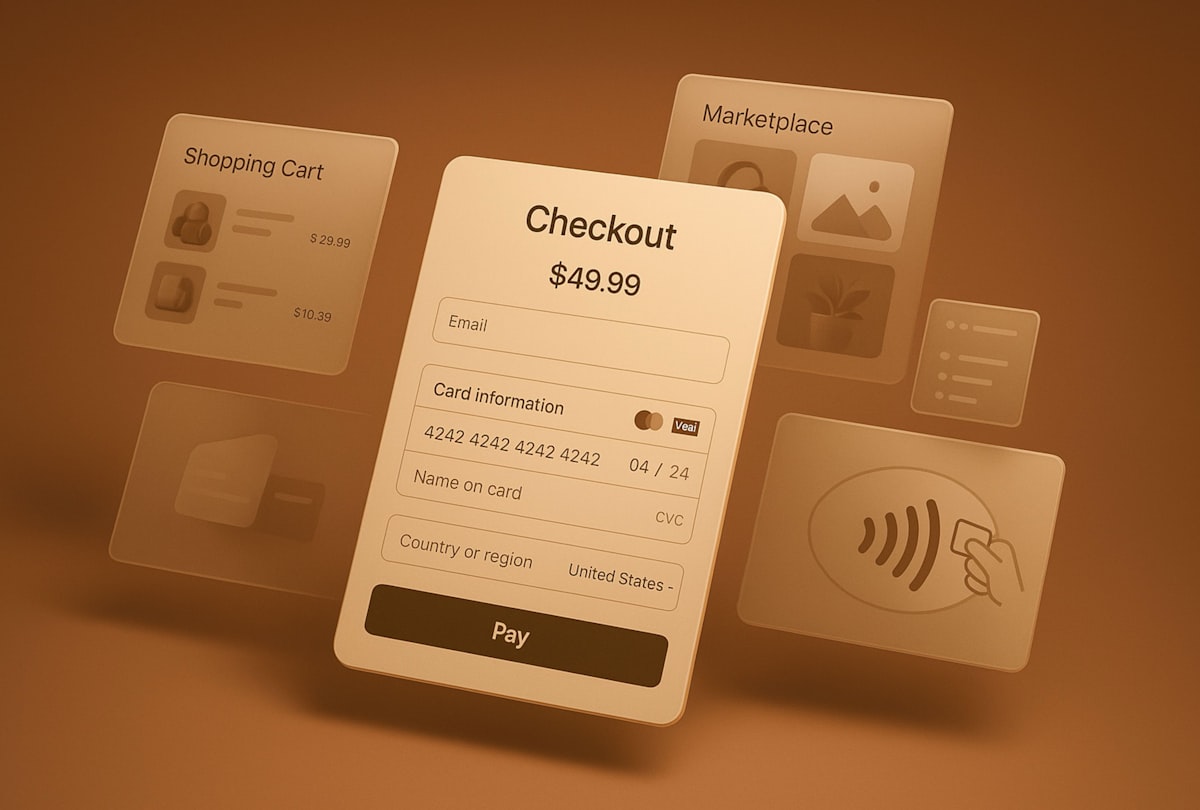
OpenAI launched Instant Checkout in fall 2025 with initial partners including Etsy, Walmart, and Shopify. The pitch was compelling: see a product recommendation in ChatGPT, buy it without leaving the conversation. Six months later, they're replacing it with dedicated ChatGPT Apps where retailers build their own experience inside the chat interface — and the user completes the purchase on the retailer's site, not OpenAI's.
Walmart's Daniel Danker made the pivot public at the Morgan Stanley TMT Conference on March 4, 2026: "By this time next month, you will not see that experience anymore." He called the Instant Checkout era "a very temporary moment in time." When the world's largest retailer describes your product as temporary, the market is sending a clear signal.
The failure wasn't a single point of breakdown. It was at least five problems stacked on top of each other:
Trust. Only 34% of shoppers were willing to complete payment inside an answer engine as recently as mid-2025 (Forrester, July 2025). That number has climbed — Omnisend's March 2026 survey of 1,072 US consumers found 80% now accept AI handling checkout, a 136% increase in 12 months. But acceptance in a survey and behavior at the point of sale are different things. Thirty-eight percent say they've purchased through ChatGPT. That means 62% haven't, despite months of availability.
Liability. When a purchase goes wrong — wrong size, damaged item, unauthorized charge — who does the consumer call? If you bought through ChatGPT's Instant Checkout, the answer was genuinely unclear. Retailers want to own the customer relationship because they're legally responsible for fulfillment, returns, and refunds. A chatbot intermediary adds complexity without absorbing any of that liability.
Payment security. Storing payment credentials inside a conversational AI adds an attack surface that doesn't exist in traditional e-commerce. Every security team at every major retailer raised this flag.
Inventory accuracy. AI recommendations are only as good as their data freshness. An AI that says "this item is in stock at $299" when the actual price changed two hours ago or the item sold out creates a worse customer experience than no AI at all.
Ad economics. ChatGPT's advertising performance has been underwhelming. Industry reports from March 2026 show a 0.91% click-through rate for ChatGPT ads, compared to roughly 6% for Google search ads — nearly a 7x gap. One advertiser reported being able to spend only 3% of a $250,000 ChatGPT ad budget because inventory and targeting were too limited. AI commerce needs advertising revenue to sustain itself, and the unit economics don't work yet.
What Are OpenAI and Google Building Instead?
Both companies reached the same conclusion independently: AI should assist discovery, but the retailer should own the transaction.
OpenAI's answer is the ChatGPT Apps model announced at Shoptalk. Retailers build dedicated apps that live inside ChatGPT's interface. A consumer asks for running shoes, ChatGPT recommends options, and when the user wants to buy, they're handed off to Nike's or Sephora's app — still inside ChatGPT, but with the retailer's checkout flow, branding, and data ownership. Etsy and Sephora are developing apps. Shopify merchants connect through Agentic Storefronts.
Google went even bigger. Their Universal Commerce Protocol (UCP) is an open standard that gives any AI agent a common language for interacting with retailer systems — pulling live inventory, building carts, applying loyalty points, and handing off to checkout. Salesforce and Stripe are integrating at launch. Etsy, Wayfair, Shopify, Target, and Walmart are already on board.
The pattern is identical in both cases: AI handles Layers 1 and 2 (discovery and comparison), then exits at Layer 3 (transaction). The retailer takes over for checkout, fulfillment, and returns. OpenAI and Google spent billions trying to own the full stack and ended up building funnels that deposit users at a retailer's door.
That pattern has a name in our industry. It's called a comparison platform.

Why Does This Make Comparison Platforms More Valuable?
Here's what I think most AI commentary gets wrong: the assumption that AI shopping replaces comparison platforms. The Shoptalk announcements prove the opposite. AI needs comparison infrastructure more than ever, precisely because it can't close transactions.
I've been building Mubboo's shopping vertical across Australia and the United States simultaneously, and the single hardest engineering problem isn't AI integration — it's data accuracy. Making sure that when a consumer in Sydney sees a Dyson V15 at $899, that price is actually $899 at that retailer today. Multiply that by 12 models, 5 retailers, and 5 countries, and you understand why AI systems don't maintain this data themselves. It's expensive, it requires retailer relationships, and it changes constantly.
AI platforms need this data. Google's UCP is an acknowledgment that AI agents need structured, reliable product information from external sources. When ChatGPT recommends a product, the underlying data often comes from affiliate feeds, merchant APIs, or — increasingly — from comparison sites that have already done the verification work.
AI Commerce: What Works vs. What Doesn't
| Capability | AI Performance | Evidence | |:---|:---|:---| | Product discovery | Strong | ChatGPT Shopping, Google AI Overviews growing fast | | Price comparison | Weak | Needs structured data from external sources | | Personalized recs | Strong | 89% of consumers willing to share data for better results | | Checkout / payment | Failed | OpenAI abandoned Instant Checkout, March 2026 | | Returns / service | Not attempted | Liability and trust barriers remain unresolved | | Dynamic pricing | Consumer rejected | 70% would leave a retailer using AI dynamic pricing (Omnisend) |
That table tells a specific story. AI is strong at the top of the funnel and weak or failed at the bottom. Comparison platforms occupy exactly the space where AI is weakest: verified multi-retailer pricing, structured product data, and transparent recommendations that show the same information to every user.
The Omnisend finding on dynamic pricing deserves its own analysis. Seventy percent of consumers said they would abandon a retailer that used AI to charge different people different prices based on personal data. That's not a small minority with a niche concern — it's a supermajority rejecting the core monetization premise of personalized AI commerce. Comparison platforms show the same price to everyone. That neutrality isn't a limitation; it's a feature that 70% of consumers are actively demanding.
How Does GEO Change the Relationship Between AI and Comparison Sites?
Academic research published in March 2026 found that only 15% of webpages retrieved by ChatGPT are actually cited in its responses. That stat initially sounds like bad news for publishers. But it means the pages that do get cited hold enormous influence over what AI tells consumers.
At Mubboo, we've been structuring our content specifically for Generative Engine Optimization — self-contained paragraphs with data points, clear product comparisons in table format, and question-based headings that match how people query AI systems. The goal isn't just ranking in traditional search. It's becoming a source that AI models pull from and cite when consumers ask shopping questions.
This creates a relationship that's symbiotic rather than competitive. AI handles discovery (Layer 1), surfaces Mubboo's structured comparison data for evaluation (Layer 2), and then the consumer clicks through to a retailer to complete the purchase (Layer 3). Everyone in that chain provides value. Nobody is trying to own steps they can't execute well.
The Rise and Retreat of AI Checkout
Fall 2025 — OpenAI launches Instant Checkout with Etsy, Walmart, Shopify. Promise: buy products without leaving ChatGPT.
December 2025 — Retailers scramble to integrate. ChatGPT ad CTR sits at 0.91% vs. Google's ~6%. One advertiser spends just 3% of a $250K budget.
March 4, 2026 — Walmart's Daniel Danker publicly calls Instant Checkout "a very temporary moment in time." Announces Sparky integration into ChatGPT Apps instead.
March 24-26, 2026 — Shoptalk in Las Vegas. OpenAI announces ChatGPT Apps model. Google launches Universal Commerce Protocol. Gap becomes first fashion brand selling through Gemini. Every major retailer hedges across all platforms.
The pattern: AI platforms tried to own the transaction → failed → retreated to discovery and comparison → now need external sources for structured data.
What Should Builders Do With the 12-18 Month Window?
Here's the strategic reality as I see it. OpenAI and Google just proved two things simultaneously: AI shopping is a massive market that both companies are investing billions to capture, and transaction closure is hard enough that neither has solved it after years of effort.
That creates a window. Not a permanent moat — eventually, one or both will crack some version of AI-native checkout, probably through the ChatGPT Apps or UCP model rather than anything that looks like Instant Checkout. But for the next 12-18 months, AI platforms will be in discovery-and-comparison mode, not transaction mode. And during that window, the platforms that provide the best structured comparison data will become the ones AI depends on.
Only 18% of US retail currently happens online, according to Shopify president Harley Finkelstein at the Upfront Summit in March 2026. That means 82% of commerce still happens in physical stores. AI ad spend is projected to hit $57 billion in 2026, representing 63% growth (Madison and Wall). There's a staggering amount of money chasing a shopping experience that hasn't been built yet.
At Mubboo, what we're doing during this window is straightforward: building content authority across five countries, structuring every comparison page for AI citation, and maintaining affiliate relationships that handle the actual transaction. We're not trying to build a checkout. We're not trying to compete with ChatGPT at discovery. We're building the best Layer 2 — comparison and evaluation — and making it available to both consumers who visit directly and AI systems that need reliable product data.
Where AI Shopping Goes From Here
The future of AI shopping isn't AI-controlled shopping. Shoptalk 2026 made that clear. It's AI-assisted shopping where large language models handle the conversational discovery that they're genuinely good at, structured data sources provide the verified comparison information that AI can't maintain internally, and retailers handle the transaction, fulfillment, and customer service that require real-world logistics and legal accountability.
Comparison platforms don't compete with AI in that model. They power it. The question for anyone building in this space isn't whether AI will replace you — it's whether your data is structured well enough for AI to use it, and whether your content is authoritative enough for AI to cite it. Those are solvable problems. Transaction closure, as OpenAI just demonstrated with a $157 billion valuation behind it, is not — at least not yet.
I'm betting the next 18 months of Mubboo's growth on that gap staying open. So far, the biggest AI companies in the world keep proving me right.

Richard Lee
Founder
Richard is the founder of Mubboo, building an AI-powered platform that helps everyday consumers navigate shopping, travel, finance, and local life across multiple countries.