When AI Agents Book Your Dinner, Try On Your Clothes, and Open an Office in Your City: What Consumer Platforms Must Do Next

Richard Lee
April 6, 2026 · 8 min read
In the first week of April 2026, four developments landed within days of each other. Separately, each one is a product announcement or a financial projection. Together, they describe the shape of AI-powered consumer life for the next two years.
Google opened agentic booking in AI Mode to all US users. Restaurants are live now — you describe what you want in natural language, the AI searches availability across OpenTable, Resy, and Tock simultaneously, and it completes the reservation. Flights and hotels with Booking.com, Expedia, and Marriott are coming next. The same week, Google announced that AI virtual try-on would be embedded directly into search results starting April 30, with ASOS already reporting measurable returns reduction from the technology. Anthropic signed its first national AI agreement — with Australia — confirming a Sydney office opening within weeks, AUD $3 million in research funding, and startup API credits worth US $50,000 each. And Goldman Sachs projected 49 percent semiconductor revenue growth by end of 2026, with AI hardware revenues on track to exceed $700 billion.
As someone building Mubboo across five countries from Sydney, I read these four stories as pieces of a single pattern. The AI infrastructure is being built. The frontier companies are localising. And the consumer-facing applications have reached the point where AI agents do things, not just say things. The question for consumer platforms like ours is direct: what role do you play when the AI agent handles the transaction?
The Transaction Layer Is Being Automated
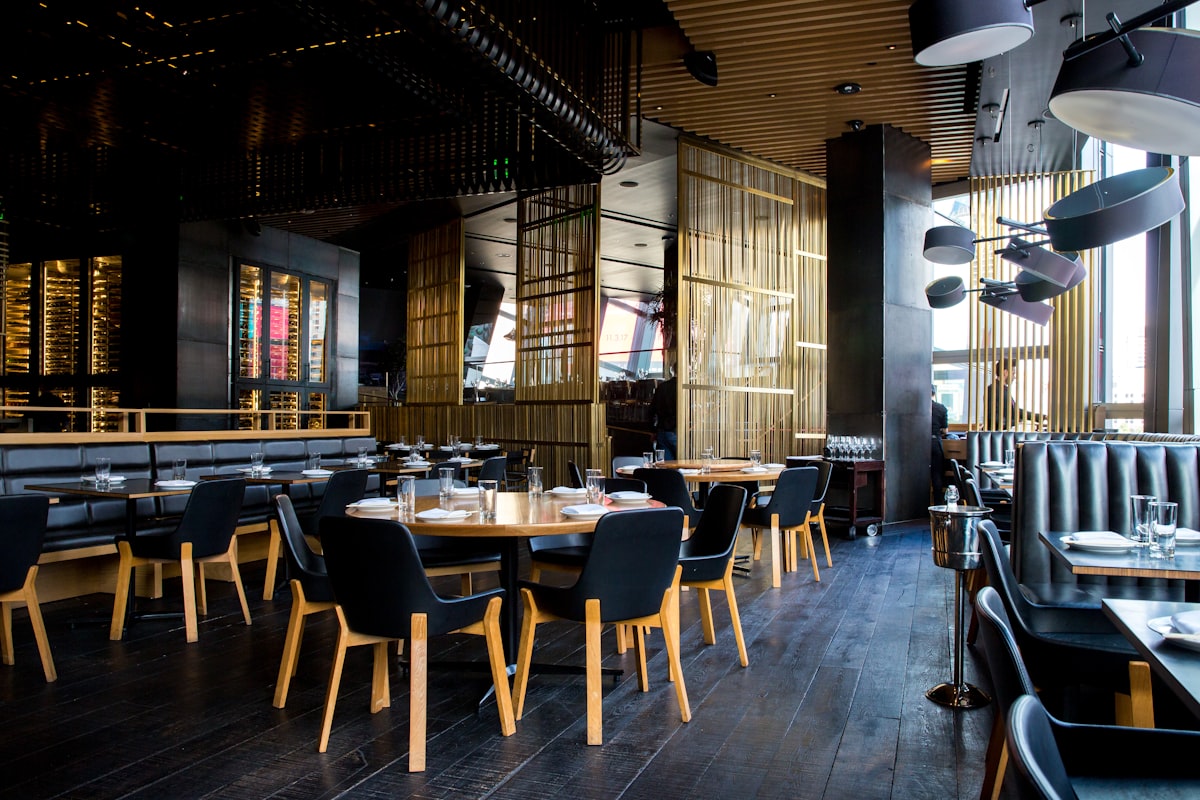
Google's agentic booking works like this: you type "find me a quiet Italian restaurant in the West Village for four people, Saturday night, around 8pm." The AI searches multiple booking platforms at once, filters by your criteria, presents options with availability and ratings, and — for restaurants — completes the reservation without you leaving the conversation. No app switching. No comparing tabs. No calling the restaurant.
Virtual try-on follows the same logic applied to shopping. Google's Shopping Graph now indexes more than 50 billion product listings. Combined with generative AI, a user can upload a photo and see how clothes look on their body before purchasing. According to eMarketer, listings with virtual try-on generate 60 percent more high-quality product views than standard listings. ASOS has reported that the technology is reducing return rates — a direct hit against the $849 billion annual returns problem that CNBC reported on April 5.
IDC's FutureScape 2026 predicted this shift with unusual precision: "hospitality, dining, and travel brands will operate in an environment where discovery, comparison, booking, and service are mediated by intelligent agents."
The pattern is clear. Searching, comparing, and booking — the mechanics of consumer transactions — are being automated. AI agents handle the work that humans used to do with ten open browser tabs. The question is what remains for humans and human-built platforms to provide.
The Infrastructure Is Being Localised
Anthropic's agreement with the Australian Department of Industry, Science and Resources is not a vague partnership announcement. It includes specific commitments: safety research collaboration, economic data sharing, AUD $3 million in research funding for Australian institutions, and startup API credits. The Sydney office means local staff, local support, and lower-latency access to Claude for Australian developers and businesses.
For Mubboo, based in Sydney, this is not abstract. We use Claude across our editorial and product workflows. A local Anthropic presence means faster iteration and direct access to the team building the models we depend on. When I started Mubboo eighteen months ago, every frontier AI company operated exclusively from San Francisco. The fact that Anthropic is opening in Sydney — and that this is part of a formal government agreement rather than just a commercial expansion — tells me the infrastructure gap between US and non-US markets is closing faster than anyone expected.
Goldman Sachs' semiconductor projection reinforces this. A 49 percent revenue growth rate means the compute layer is expanding rapidly. As chips become cheaper and models become more efficient — Google's TurboQuant architecture, token-efficient designs — more AI consumer features become economically viable in smaller markets. What was US-only twelve months ago is reaching Australia, the UK, Canada, and New Zealand. For a platform operating across five countries, this compression of the infrastructure gap is the single most important trend we track.

Three Layers That Still Need a Human Voice
AI agents are getting better at executing transactions. But there are three layers where consumer platforms provide something agents cannot replicate.
Editorial Judgment. An AI agent can find an available restaurant reservation at a quiet Italian place in the West Village. It cannot tell you whether the restaurant is actually good — whether the pasta is fresh or the service is indifferent or the noise level spikes after 9pm. Google's personalisation uses your search history and Maps data. But personalisation based on past behaviour is not the same as an informed recommendation based on someone who has actually been there.
The same applies to shopping. Virtual try-on shows you how a jacket looks on your body. It does not tell you whether the fabric quality matches the price, whether the brand's sizing runs small after two washes, or whether an equivalent jacket at half the price exists from a brand the algorithm has not surfaced. Comparison platforms that invest in editorial depth — honest assessments, specific warnings, direct anti-recommendations — provide a layer that the AI transaction system cannot generate on its own.
Trust Verification. Last week, the New York Times profiled Medvi, a $401 million telehealth company run by two employees using AI to generate marketing content at scale. As we wrote in our analysis: when AI can build a company that large with almost no human staff, the volume and velocity of new consumer businesses will only increase. Many will be legitimate. Some will not be.
AI agents surface options based on data availability and relevance scoring. They do not verify whether the business behind the listing is trustworthy, whether the product matches its marketing claims, or whether the pricing is fair relative to what else is available. At Mubboo, we research every product category we cover across our US and Australian sites. We test claims against reality. We flag when pricing does not make sense. This verification work becomes more necessary — not less — as AI agents make discovery faster but trust harder to establish.
Local Context. Anthropic's own Economic Index shows that Australians use AI differently from Americans. Usage patterns, preferred categories, and prompting styles all vary by country. Travel recommendations that resonate with American consumers do not automatically translate for Australians — different budgets, different holiday patterns, different airline networks, different seasonal timing.
At Mubboo, we build for five markets with localised content in each. Every article uses the conventions of its audience — Australian English for AU, American conventions for US, British standards for UK. We write about local retailers, local service providers, local pricing. An AI agent operating globally cannot provide this depth of local context without a structured, locally-informed data source to draw from. Being that source — structured, trustworthy, written by people who live in these markets — is how comparison platforms stay relevant when agents handle the booking.
The Agent Handles the Transaction. The Platform Provides the Judgment.
This week's four stories describe a world arriving faster than most predictions suggested. AI agents that book your dinner, show you clothes on your body, and expand into your city are not speculative — they are shipping products with real users.
For consumer platforms, the response is not to compete with AI agents on speed or transaction efficiency. Google will always be faster at searching availability across booking platforms. The response is to provide the editorial judgment, trust verification, and local expertise that agents need as inputs — and that consumers need as a check on what agents recommend.
At Mubboo, we are building across Shopping, Travel, and Local in five countries. Every piece of content we publish is structured for both human readers and AI systems. We write for the reader sitting in Sydney or New York or London who wants to know not just what is available, but what is worth choosing. Our value is not in finding the reservation — Google does that now. Our value is in telling you whether you should take it.
The AI agent handles the transaction. The comparison platform provides the judgment. Both are necessary. Neither works alone.
Sources: Google Blog (agentic booking and virtual try-on announcements), CNBC (April 5, 2026), Anthropic official announcement (April 1, 2026), Australian Department of Industry, Science and Resources (April 1, 2026), Goldman Sachs (April 5, 2026), IDC FutureScape 2026, eMarketer, New York Times (April 2, 2026).

Richard Lee
Founder
Richard is the founder of Mubboo, building an AI-powered platform that helps everyday consumers navigate shopping, travel, finance, and local life across multiple countries.