AI Made Travel Booking Effortless — And $13 Billion in Fraud Followed. What This Means for Every Consumer Who Books Online

Richard Lee
April 13, 2026 · 10 min read
Scenario one: You tell Google AI Mode you want a Thai restaurant in Surry Hills tonight for four people with outdoor seating. In seconds, AI finds three options with real-time availability, checks your dietary preferences, and presents booking links. You tap, confirm, done. This became possible in Australia on April 10.
Scenario two: You find a boutique hotel in Lisbon on what looks exactly like Booking.com. Glowing reviews. Professional photos. You pay $2,400 for a week-long stay. When you arrive at the address, the hotel has no record of your reservation. The website — which looked indistinguishable from the real thing three hours ago — has vanished. The reviews were written by AI. The photos were scraped from a real property in Porto. McAfee estimates AI travel scams cost consumers $13 billion last year, with the average victim losing roughly $1,000.
Both scenarios run on the same underlying technology. AI that books a real restaurant in seconds can build a fake hotel website in minutes. AI that writes compelling property descriptions for Marriott also writes compelling property descriptions for scammers. The convenience and the fraud share the same engine. This is the paradox every consumer platform — including the one I run — must confront in 2026.

The convenience side is accelerating faster than anyone predicted
Three days ago, Google expanded AI Mode restaurant booking to Australia, the UK, Canada, and five other countries. Flights and hotels are next, with Booking.com, Expedia, Marriott, IHG, Choice Hotels, and Wyndham confirmed as partners. That is not a pilot. That is the world's largest search engine wiring itself directly into the transaction layer of travel.
The consumer appetite matches the infrastructure investment. A Dune7 survey of 1,000 US adults, published April 8, found that 71 percent want an AI booking assistant. IBM and the National Retail Federation report that 45 percent of consumers globally already use AI in their shopping journeys — 41 percent for product research, 33 percent for interpreting reviews, 31 percent for finding deals. Shopify's data from early 2026 shows AI-driven traffic up 7x year-over-year, with AI-assisted purchases up 11x.
Inside specific retailers, the numbers are even sharper. Walmart's Sparky AI assistant drives 35 percent higher order values, with half of the retailer's app users engaging with it. Macy's "Ask Macy's" chatbot produced a 4.75x increase in spending among users who interacted with it, according to Bloomberg's March reporting. These are not experimental features buried in settings menus. They are primary shopping interfaces generating measurable revenue.
The travel industry is pushing further. TravelDailyNews reported on April 8 that AI-powered "liquid itineraries" — plans that rearrange themselves in real time based on weather changes, crowd levels, and flight delays — are moving from concept to product. Your Tuesday in Barcelona gets rained out, so AI shifts your museum visit forward and moves the beach day to Thursday when the forecast clears. The technology works. The adoption is real. The convenience is genuine.
The fraud side is accelerating just as fast
McAfee's summer 2025 research, widely cited by Fodor's in March 2026, estimated $13 billion in losses from AI-powered travel scams. The FTC's data tells a more precise story: the raw number of fraud reports stayed roughly flat, but financial losses climbed 25 percent. Fewer scammers are operating, but each operation is dramatically more effective — because AI handles the parts that used to require skill.
Three attack vectors now dominate.
Fake booking sites are the most visible. AI generates pixel-perfect clones of Booking.com or Expedia in minutes, complete with AI-written reviews, AI-generated property photos, and working payment forms. Newsweek's March 21 investigation documented "ghost bookings" — consumers pay the full amount, receive confirmation emails that look authentic, and arrive at real addresses to find hotels that have no record of their reservation. The site disappears within days. The money does not come back.
Voice cloning requires just seconds of audio. A few sentences from a social media video or podcast clip provide enough material for AI to generate a convincing voice replica. The scam targets family members: "I'm stranded overseas, I lost my passport, I need you to wire money." Fodor's reporting notes that these calls are increasingly difficult to distinguish from real ones, even for people who know what to listen for.
Loyalty point theft targets the $328 billion global loyalty economy. DataDome's research, published via TravelMole on April 8, describes credential-stuffing bots that test stolen username-password combinations against airline and hotel loyalty accounts. AI makes the bots smarter — they mimic normal user behavior patterns, rotating login times and IP addresses to avoid detection. Booking.com acknowledged in March that it is increasing anti-fraud investment as fake listings and phishing attacks rise across its platform.
The cruelest twist is the resolution wall. Newsweek's reporting highlights that when victims of AI fraud try to get help, they encounter AI-gated customer support — chatbots that cycle through scripted responses, automated phone trees that never reach a human, email systems that generate template replies. The same technology that enabled the fraud now blocks the recovery.
Rishika Desai of BforeAI told Fodor's: "AI has transformed phishing into a sophisticated, automated industry." That is not hyperbole. It is a description of what happens when the tools for creating professional-looking content become free, instant, and require no expertise.
The irony is structural. DataDome reports that 78 percent of consumers rely on AI tools for online shopping decisions. The same AI ecosystem that helps them compare prices and read reviews also powers the scams targeting them. The tools are identical. The intent is the only variable.
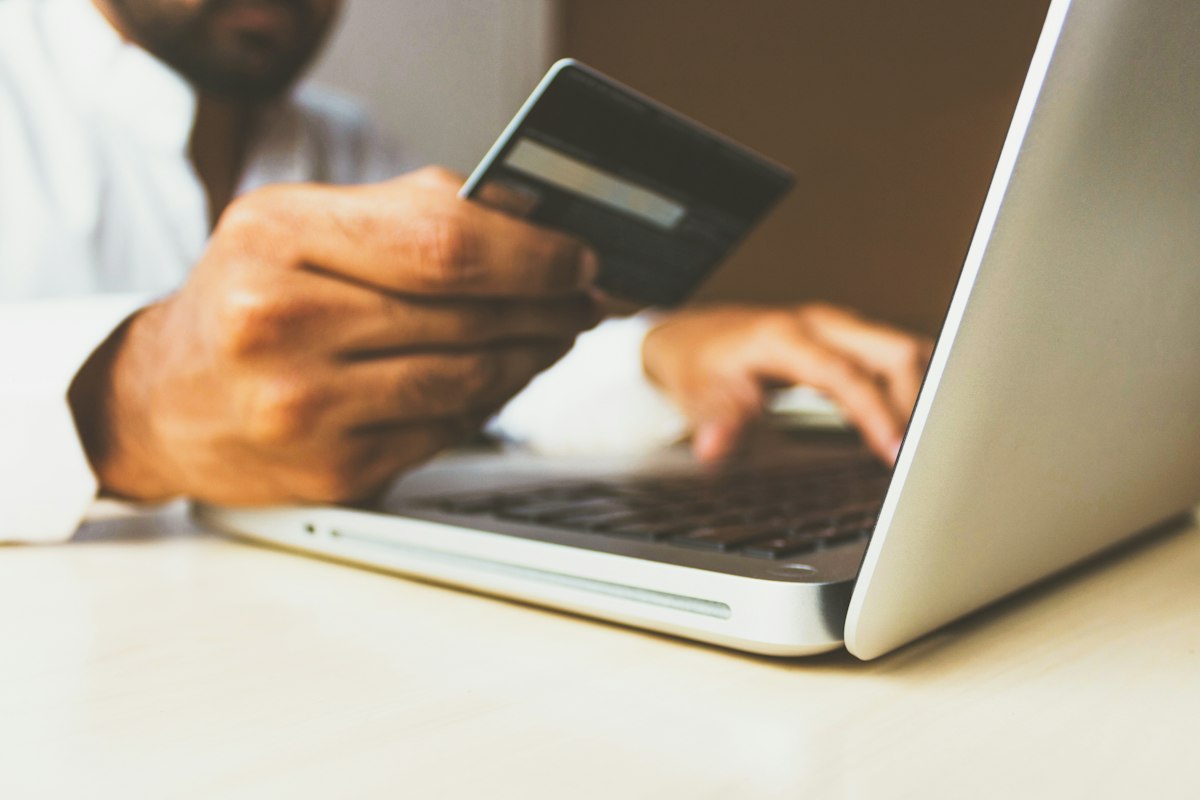
The trust equation has inverted
Here is what the consumer data actually says when you read it together instead of in isolation.
IBM-NRF: 45 percent of consumers use AI for shopping. Acosta Group, reporting via RetailCustomerExperience in December 2025: 70 percent have used AI shopping tools, but only 12 percent trust AI enough to complete a purchase on their behalf. Dune7: 71 percent want an AI travel booking assistant. Skift, April 3: only 2 percent want that assistant to book with full autonomy. The Retail Technology Innovation Hub, citing research from the Retail Technology Show published April 10: 53 percent of consumers actively distrust AI-generated social media content.
The pattern across all of these studies is consistent. Consumers want AI for research, comparison, and discovery. They want human judgment — or at minimum, human-verified platforms — for the decision that involves their money.
This is rational behavior, not technophobia. AI cannot distinguish between a legitimate hotel and a scam hotel. It processes text, images, and ratings. A fake site with AI-generated five-star reviews and AI-generated photos of rooms that do not exist looks, to an AI system, exactly like a real site with real reviews and real photos. Only a platform that has verified its partners, tested its links, and applied editorial judgment can make that distinction.
When every website looks professional — because AI makes design quality free — the differentiator is no longer how a site looks. It is whether someone with accountability stands behind it.
What comparison platforms must actually do about this
I run Mubboo. We operate comparison pages across shopping, travel, finance, and local services in multiple countries. The fraud problem described above is not abstract to us. It is a direct threat to the consumers who use our recommendations to make booking decisions. If we link to a partner that turns out to be compromised, or if a scam site mimics our recommendations to build credibility, the damage lands on the consumer first and on our reputation second.
So here is what we actually do, and why.
Every affiliate link on mubboo.com/travel and mubboo.au routes through verified partners — Aviasales for flights across 800+ airlines, Viator (a Tripadvisor company) for experiences, Priceline through CJ's verified network for hotels. We do not accept unverified merchant listings. We do not run programmatic ad placements that could serve scam content. Every hotel recommendation references a real property on a real booking platform that we have confirmed exists.
Our content updates on three cycles: daily through API-connected pricing data, monthly through seasonal editorial reviews, and quarterly through full structural audits. Scam sites do not maintain content freshness. They cannot, because the properties they list do not exist and have no real pricing to update. A fake Lisbon hotel page has static prices because there is no API feeding real rates. Freshness is a fraud signal, and we build it into the content layer.
We publish anti-recommendations. "Skip this hotel — the renovation photos are from 2024 and the current state does not match." "This deal requires a non-refundable deposit through a third-party payment processor we have not verified." No platform funded by the businesses being reviewed would publish those sentences. We can, because our revenue model aligns with the consumer's interest: we earn when they book through verified partners and have a good experience, not when they click on any listing regardless of quality.
Every article carries a named author with a verifiable identity. Every data point includes source attribution. These are not marketing differentiators. In a market where AI generates unlimited professional-looking content, they are safety infrastructure.
The $13 billion problem is not a technology problem
AI made travel booking effortless. AI also made travel fraud effortless. Both statements are true simultaneously, and they will remain true simultaneously for the foreseeable future, because the underlying technology does not have opinions about how it gets used.
The consumer who books a restaurant through Google AI Mode in Sydney this weekend is using the same class of technology that built the fake hotel in Lisbon. The difference is not the AI. The difference is the platform standing between the consumer and the transaction — the verification layer, the editorial judgment, the accountability when something goes wrong.
At Mubboo, we do not control the AI. Nobody controls the AI. We control the trust layer. Every link verified through named partners. Every recommendation editorially reviewed by people who are accountable for what they publish. Every anti-recommendation that a scammer would never include because it would undermine the fraud.
The $13 billion in annual losses is a trust infrastructure failure. Building trust infrastructure — verified partners, editorial accountability, transparent sourcing, content freshness that scam sites cannot replicate — is exactly what independent comparison platforms exist to provide. The AI made the problem. The AI will not fix it. People and platforms with something to lose will.

Richard Lee
Founder
Richard is the founder of Mubboo, building an AI-powered platform that helps everyday consumers navigate shopping, travel, finance, and local life across multiple countries.