Visibility Is the New Shelf Space

Richard Lee
April 18, 2026 · 8 min read
I was a kid the first time I saw a supermarket shelf treated as an economic resource. My father walked me down an aisle in Sydney and explained that brands paid for eye-level placement, that the best real estate was the center of the middle shelf, that the ankles of the aisle were where products went to die. Shelf space was physics. Physical stores had limits. Somebody had to decide what goes where, and that somebody was a buyer who had weighed every option and chosen the two or three a shopper would see first.
The internet was supposed to end all of that. Google became the new shelf, and it had infinite depth. If your restaurant was good and your reviews were honest, you could rank. For twenty years local search worked roughly like this: search "best Thai restaurant in Austin" and Google returned ten blue links, plus a map pack of three, plus a knowledge panel. Small restaurants could win. Independent operators could compete. Scale helped, but it didn't decide.
Last week SOCi published the 2026 Local Visibility Index. They analyzed 350,000 business locations across 2,751 multi-location brands. The headline number: ChatGPT now recommends just 1.2% of all local business locations. Gemini recommends 11%. Perplexity recommends 7.4%. Google's local 3-pack, the old equalizer, still surfaces 35.9% of those same brands.
Shelf space came back. Only now it's a conversational slot, and the shelf is a single answer.
The math of being selected
AI assistants don't return lists. They return answers. Two, maybe three recommendations per query, delivered with the confidence of a friend who has already done the research for you. There is no "page 2." There is no "see more results." There is the answer, and there is everything the answer left out.
The SOCi 2026 Local Visibility Index quantifies how brutal that exclusion is. Only 45% of brands that win Google local search also appear in AI recommendations. More than half of Google-visible brands are invisible to ChatGPT. AI local visibility is 3 to 30 times more selective than traditional local SEO, depending on which platform you measure.
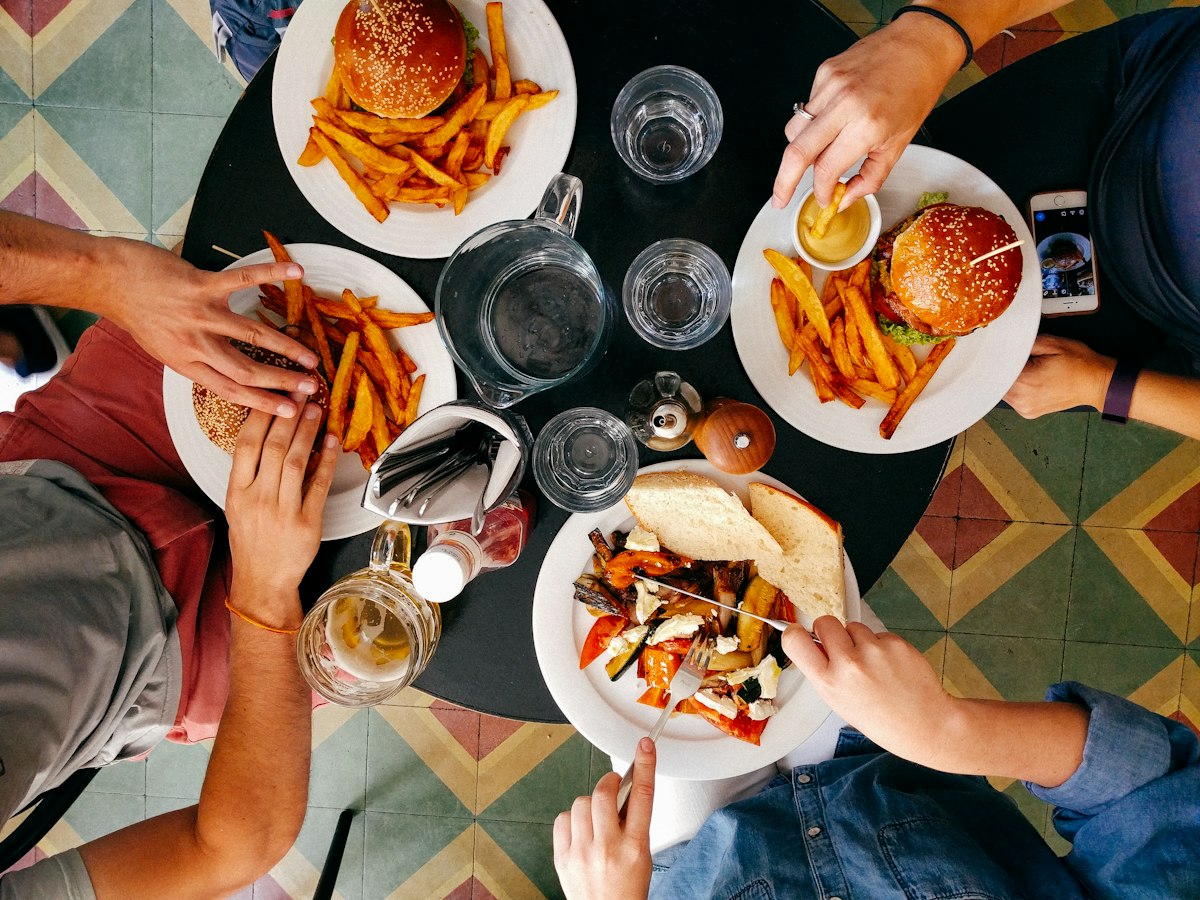
The MyPlace 2026 restaurant study pushed further into the mechanism. AI-recommended restaurants average 3,424 Google reviews. Non-recommended restaurants average 955. That's a 3.6x gap. Most damning, star ratings above 4.4 had minimal additional impact on whether AI would recommend a place. Volume beats quality ceiling. A 4.9-star independent restaurant with 600 reviews loses to a 4.3-star chain with 4,000. Quality, once past a threshold, stops helping. Volume keeps helping forever.
When I read that review-volume number, I thought about the restaurants we love — the small places that have been open four years, not forty. None of them have 3,424 reviews. They might have 400. They might have 200. By the logic of the new system, they don't exist.
Why the old playbook stopped working
Google's ranking system evaluated keywords, backlinks, proximity, Google Business Profile completeness, and review signals. The SEO industry spent twenty years learning to game that stack. An entire professional class of local SEO consultants, citation builders, review generators, and schema specialists turned those signals into billable work. If a small restaurant paid enough of them, it could become discoverable.
AI systems evaluate something structurally different: confidence. Confidence comes from cross-source consistency. If ten independent websites describe a restaurant as "best pad thai downtown," the model has something to weigh. If one website says so, the model hedges. Independent businesses with one location and 400 reviews don't generate the cross-source density AI needs to feel certain. Chains generate that density automatically through scale. Five hundred locations times even eighty reviews each equals forty thousand reviews for the brand, plus thousands of third-party mentions, plus schema consistency across every location page.
The Whitespark 2026 local SEO survey, referenced in the SOCi coverage, still shows Google weighting Google Business Profile at 32% of local pack ranking. That 32% has almost no carry-over to AI recommendations. The two systems are not converging. They are diverging. SOCi documented the split in financial services: Liberty Tax hit 68.3% visibility in Google's 3-pack but only 19.2% on Gemini and 26.9% on Perplexity. Even strong Google performance does not translate linearly to AI.
We've been building Mubboo for seven months. The premise we started with, that consumer platforms need editorial trust and not just data, is becoming more urgent, not less. The data side of the stack is commoditizing. Every platform can buy the same Booking.com feeds, the same Amazon catalog, the same Google Places API. What can't be commoditized is editorial judgment, and judgment is exactly what the next ranking system is going to reward.
Why this is a distribution problem, not a quality problem
The best restaurant in a neighborhood is not losing to the second-best. It's losing to whoever crossed the 2,000-review threshold. That is not a Darwinian outcome of quality competition. It's an artifact of how the ranking system defines confidence. Volume of signal became a proxy for quality of signal, and once that proxy is baked into a recommendation algorithm used by hundreds of millions of people, the proxy becomes the reality.
The incentive this creates is perverse. If volume beats quality, the marginal dollar a restaurant spends doesn't go to food or service. It goes to review farming, schema optimization, citation-density campaigns, and multi-location expansion. Independent excellence stops being the path to visibility. Review-volume engineering becomes the path instead.
We've seen this movie in other categories. In Shopping, Amazon reviews became a gameable signal long before AI entered the picture, and the marketplace is still trying to clean up the wreckage. In Travel, Booking.com's review volume advantage became a structural moat that smaller platforms could not close regardless of individual property quality. Local is next. The chains that already dominate Google are about to dominate AI recommendations too, only more completely, because AI gives one answer instead of ten.
The consumer cost is fewer independent options visible at the moment of decision. The producer cost is steeper: pressure to conform to chain-scale review-volume economics or accept structural invisibility.
I'm not anti-chain. I'm anti-one-answer. When the map of everything collapses into a recommendation of two or three, somebody has to ask who chose those two, and who got excluded.
What we're building for, and why this moment matters
Mubboo exists as a federation of country-specific editorial authorities across Shopping, Travel, and Local. We aren't trying to replicate ChatGPT's conversational surface or Google's ranking algorithm. We are building what we think is the structurally missing layer: editorial, third-party recommendations that AI assistants can cite and consumers can trust.
When a model decides which two restaurants to name, it pulls signal from somewhere. Today it pulls mostly from review volume. Tomorrow, if there's a credible editorial authority on the relevant city or category, it can pull from editorial judgment too. The "be cited, not just visited" framing we wrote about on April 17, when Adobe reported AI traffic converting 42% better than human traffic, applies doubly here. Citation authority is the asset being accumulated, and Local is the sharpest version of the problem we have encountered so far.
In Shopping, if ChatGPT doesn't name your product, a consumer can still visit Amazon and search. In Travel, they can fall back to Expedia. In Local, if you are not in the answer, you are simply not considered. There is no fallback aggregator that consumers reflexively visit after an AI assistant disappoints them for a dinner choice at 7pm on a Friday. The one-answer surface is also the last surface. That is why the 1.2% number hits harder than any of the trust-gap figures we have covered in Shopping or Travel.
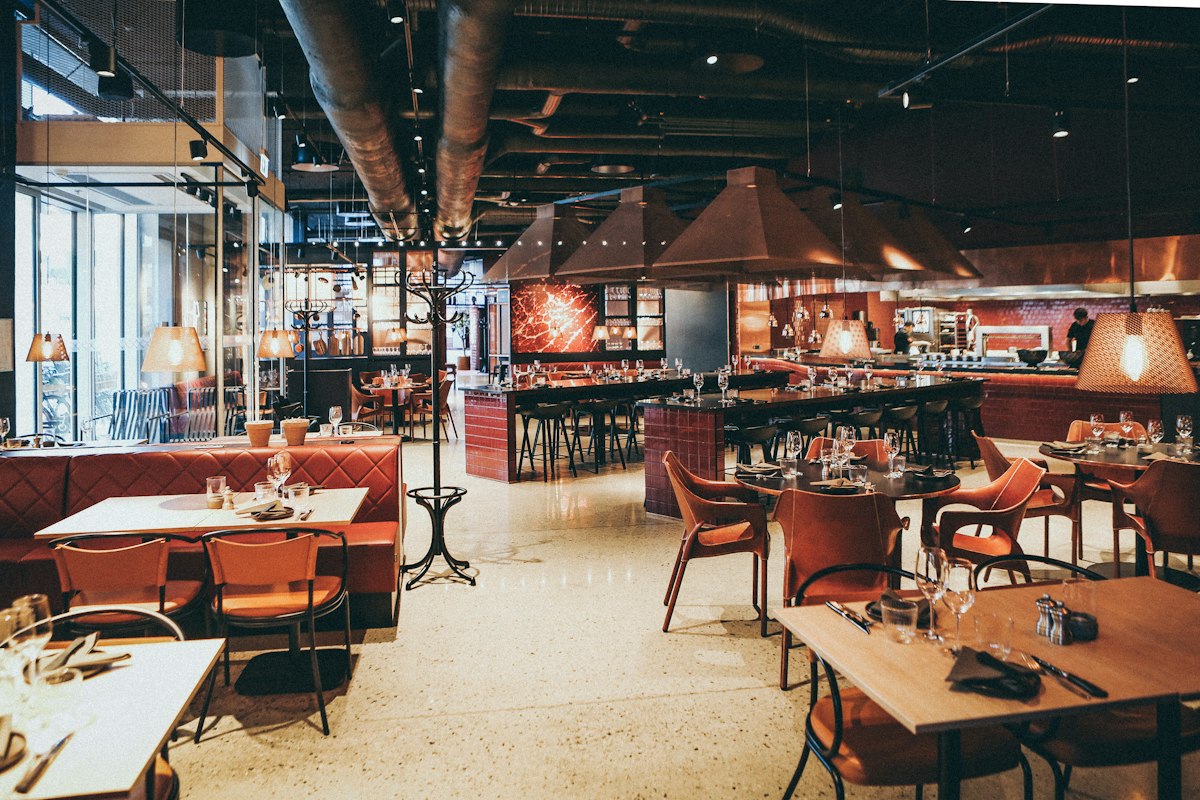
Independent editorial coverage for Local, country by country, is the unglamorous work we think matters. It means writing opinionated, specific recommendations for specific neighborhoods in specific cities. At scale. With enough density that when an AI assistant answers "best places to eat in Brooklyn," our coverage is one of the corroborating sources it has to read. We are a small team writing about cities we know, cities we are learning, and cities where local experts trust us to write. It's slow work. I think it's the right work.
My father was wrong about one thing. Shelf space wasn't just physics. It was an editorial decision dressed up as geometry. Store buyers decided what got eye-level placement. They were, in effect, critics, making trust-weighted calls on behalf of shoppers who couldn't possibly evaluate every product themselves.
AI assistants are now those buyers. They choose the two. They decide what's on the digital shelf at the moment of decision. The only question is what signal they trust.
If the signal is review volume, scale wins and independent excellence loses. If the signal is editorial authority from sources AI can verify and cite, a different economy becomes possible, one where an excellent restaurant with 600 reviews can still be named because a trusted editor named it first.
That's the world we're trying to help build. One city at a time.

Richard Lee
Founder
Richard is the founder of Mubboo, building an AI-powered platform that helps everyday consumers navigate shopping, travel, finance, and local life across multiple countries.