OpenAI Tried to Build a Store Inside ChatGPT. It Failed. Here's Why That Matters for Every Consumer Platform.

Richard Lee
April 16, 2026 · 9 min read
In September 2025, OpenAI launched Instant Checkout inside ChatGPT and positioned it as the future of commerce. Shopify's president called it "the new frontier." Etsy, Walmart, and Target signed up. Stripe handled the payments. OpenAI had 800 million weekly users and the most advanced AI model in the world. Six months later, roughly 30 Shopify merchants had integrated — out of a promised million. Conversions were near zero. OpenAI had not built a sales tax collection system. On March 24, the company officially killed the feature and announced it would focus on product discovery instead.
I have been covering AI commerce for two weeks at Mubboo. I have cited six independent studies, analyzed three competing checkout protocols, and documented trust gap data from more than 30,000 survey respondents across five continents. OpenAI's failure is the single most important data point in that entire body of evidence. Because it answers a question that surveys can only approximate: when a $300 billion AI company actually builds the checkout, do consumers use it? The answer is no.

What happened — the six-month timeline
September 2025. OpenAI announces Instant Checkout with Shopify, Etsy, and Stripe. The pitch, in the words of OpenAI's launch post: "ChatGPT doesn't just help you find what to buy, it helps you buy it." Shopify's president calls it "the new frontier of commerce." Industry analysts project rapid expansion to Shopify's full merchant base.
October 2025. Etsy, Walmart (200,000 products), and Target join. Payment flows through Stripe. The agentic commerce narrative peaks.
November–December 2025. Onboarding proves harder than expected. Product data is scraped rather than directly integrated, producing inaccurate inventory, pricing, and shipping information. There is no multi-item cart. There is no loyalty integration. There is no fraud prevention layer.
February 2026. Forrester's Sucharita Pfeiffer publishes data showing only about 30 Shopify merchants are live on Instant Checkout — out of the million the platform promised. Walmart's 200,000 products are generating near-zero conversions. OpenAI has not yet built a sales tax collection system capable of handling thousands of US jurisdictions.
March 4, 2026. Walmart's Daniel Danker calls Instant Checkout "a very temporary moment in time" at an industry event. The comment goes viral among retail analysts.
March 8, 2026. Pfeiffer's analysis hits CNBC. TD Cowen calls the scale failure "a stunning admission." Expedia stock rises 8 percent. Tripadvisor rises 13 percent. Capital markets price in the news that AI agents will not cannibalize branded consumer platforms in 2026.
March 24, 2026. OpenAI publishes an official retreat. From the company's own blog: "We've found the initial version did not offer the level of flexibility we aspire to provide." Instant Checkout is killed. ChatGPT will "focus on product discovery" instead.
April 14, 2026. Expedia and YouGov release the AI Trust Gap study: 5,700 travelers surveyed, 8 percent trust AI to book, 68 percent prefer a trusted brand. The behavioral data from OpenAI and the survey data from Expedia converge on the same conclusion in the same quarter.
Why it failed — three layers of a single problem
Layer 1: Infrastructure. Commerce is not a feature. It is an ecosystem built over decades. Sales tax across thousands of US jurisdictions. Real-time inventory sync across millions of SKUs. Fraud detection. Refund processing. Return logistics. Chargeback handling. Customer service escalation paths. Amazon, Shopify, and Walmart spent decades and tens of billions of dollars building this infrastructure. OpenAI spent six months discovering why those decades mattered. Forrester's Pfeiffer put it bluntly: "Crawling and scraping is inadequate" for the data fidelity commerce requires. Gartner's Robin Hetu said OpenAI "underestimated how difficult transactions would be."
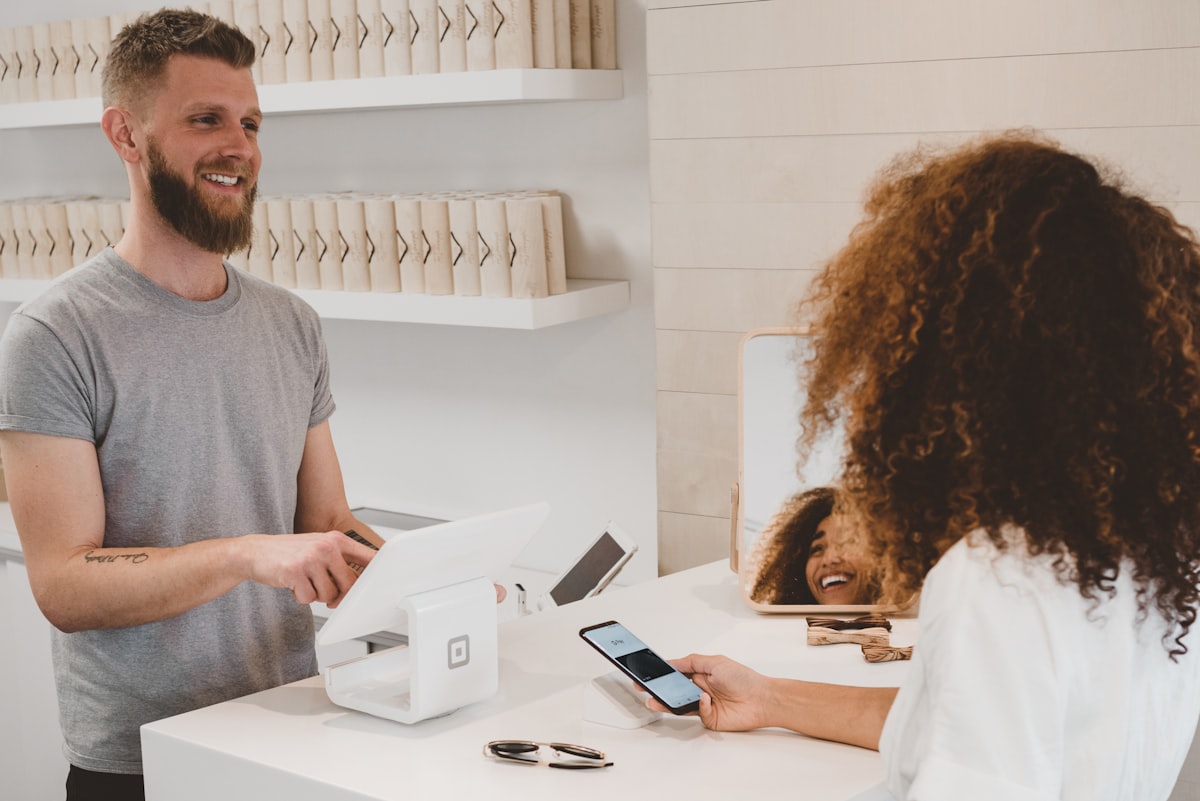
Layer 2: Trust. Buying a $400 jacket through a chatbot — with payment data stored by an AI company, no order history screen, no phone number to call, and no loyalty program crediting the purchase — is psychologically different from buying it on the retailer's own site. Expedia's data quantifies this: 68 percent prefer booking with a trusted brand even when AI booking is available. 40 percent specifically worry about post-purchase customer service. The AI Trust Gap is not irrational. It is informed. Consumers are doing the exact risk calculation the data suggests they should: use AI to compare, use a trusted channel to commit.
Layer 3: Incentives. Retailers realized that giving AI agents control of both discovery AND checkout meant losing everything of value: the customer relationship, the loyalty program, the retail media ad revenue ($72 billion market, per eMarketer), and the first-party data that powers personalization. Circana's Marshal Cohen, interviewed by CNBC: "Why would I want to give someone else control of my customer base?" Deloitte's executive survey found 81 percent of retail leaders fear AI agents will weaken brand loyalty. Shopify and Amazon are now actively restricting external AI agents from checkout. Walmart blocks agent-initiated transactions. Amazon's own Rufus Auto Buy keeps AI inside Amazon's walls. The retailers who rushed to join Instant Checkout in September reversed course by March — because the underlying economics never worked.
What the trust gap data now tells us
For two weeks, the AI Trust Gap has been a story told by survey research. OpenAI's retreat adds behavioral evidence at the scale of the internet. Here is the updated dataset:
| Evidence Source | What AI Does Well | What AI Cannot Do | |-----------------|-------------------|-------------------| | Expedia/YouGov (5,700 respondents, 3 countries) | 53% accept AI suggestions | 8% trust AI to book | | Dune7/Flesh & Bone (1,000 US travelers) | 71% want AI assistant | 2% want full autonomy | | IBM-NRF (18,000 shoppers, 23 countries) | 45% use AI for research | 12% trust AI to purchase | | Acosta Group (US shoppers, Dec 2025) | 70% used AI tools | 12% trust AI to buy | | OpenAI (800M weekly users, 6 months) | Massive discovery engagement | Near-zero checkout conversion | | Stanford AI Index 2026 | 53% global adoption | Transparency dropped 58→40 | | Capital markets (March 8) | — | Expedia +8%, Tripadvisor +13% on retreat |
This is no longer a collection of surveys. It is a convergence of evidence from consumers, companies, analysts, and capital markets. Discovery is AI territory. Transaction is trust territory. No amount of engineering — not even $300 billion of it — has changed that.
The single most revealing line in the whole story comes from eMarketer's year-end analysis: AI platforms currently drive about 1.5 percent of ecommerce, or $20.9 billion, growing roughly 4x year-over-year. That is real growth. It is also 1.5 percent. The protocols being built by Google, OpenAI, and Stripe are designed for a market that currently represents a rounding error of total consumer spending. They are building ahead of trust, and trust is moving slower than infrastructure.
What this means for Mubboo
OpenAI's Instant Checkout failure is the strongest external validation of Mubboo's architecture to date. I will explain why in the most direct terms I can.
We do not process transactions. We do not own checkout. We are a comparison and editorial platform that helps consumers evaluate AI-discovered options through independent, scenario-specific, editorially verified content. This is exactly the role that OpenAI's March 24 blog post just confirmed ChatGPT is most effective at — product discovery — and the role that consumers trust, according to every survey published in 2026.
The difference between Mubboo and ChatGPT-as-discovery-engine is editorial depth. ChatGPT serves the discovery role generically, for every product category, with scraped data and no human-verified judgment. We serve it deeply, for specific consumer verticals, with editorial judgment embedded in every comparison. Our flight route pages across mubboo.com and mubboo.au update prices every 24 hours through verified API partnerships with Aviasales (800+ airlines) — not through scraping. Every comparison table carries a "What to know" editorial column. We publish anti-recommendations: products and services we evaluated and chose not to feature. We pass a uniqueness quality gate before publication to ensure each page answers questions no other page answers the same way.
When a consumer asks ChatGPT "what is the best robot vacuum under $400 for a house with two cats and hardwood floors," ChatGPT will surface information. Our US shopping coverage is designed to be the information it surfaces — because we write for exactly those scenarios, with the specificity that generic AI cannot replicate. The same logic runs through Australian shopping coverage, where we cover the local retail ecosystem with editorial judgment that a US-trained model cannot approximate.
OpenAI spent six months learning that building a store is harder than building an AI. We knew from the start. We are not trying to be a store. We are trying to be the most trustworthy source of information that helps consumers decide which store to use.
The trust gap is not a bug
OpenAI has $300 billion in valuation, 800 million weekly active users, Stripe as a payments partner, and agreements with Shopify, Etsy, Walmart, and Target. It could not get consumers to buy through a chatbot. That failure is not a failure of OpenAI's engineering. It is a structural property of consumer trust in 2026, measured independently by YouGov, IBM, Dune7, Acosta, and now by the most expensive A/B test in the history of the consumer internet.
The AI Trust Gap is not a temporary condition waiting for better UX. It is the defining market reality for every platform that sits between AI discovery and consumer spending. At Mubboo, we do not need the trust gap to close. We need it to exist. Because as long as consumers want AI to help them explore and human-verified platforms to help them decide, we have a reason for being — and a market that the $300 billion company just confirmed is large enough to notice.

Richard Lee
Founder
Richard is the founder of Mubboo, building an AI-powered platform that helps everyday consumers navigate shopping, travel, finance, and local life across multiple countries.