The Trust Gap: AI Can Book Your Hotel in Seconds, Buy Your Groceries, and Process Your Permit, But Consumers Are Not Ready to Let It

Richard Lee
April 11, 2026 · 9 min read
Scenario one: you tell Google AI Mode to book a restaurant for your parents' anniversary dinner. A quiet place with a garden, no stairs, under $60 per person. The AI finds three options in seconds. You review, approve, and the reservation is confirmed. That felt fine.
Scenario two: you ask ChatGPT to find running shoes for flat feet, half-marathon training, under $150. It returns three options with detailed comparisons. You click through and buy from the retailer's site. That felt helpful.
Scenario three: you apply for a building permit online. An AI system categorizes your application, flags missing documents, and routes it to the appropriate department. You never spoke to a person. That felt different.
All three scenarios are real in April 2026. And in all three, the same pattern appears: consumers want AI to do the work, but they want to stay in control of the decision. The technology is ready. The trust is not. The gap between what AI can do and what 98 percent of consumers will allow it to do is the defining challenge of this year, across travel, shopping, local services, and the government interactions none of us can opt out of.

Travel: AI wants to book, consumers want to choose
A Dune7/Flesh&Bone survey published via PRNewswire on April 8, covering 1,000 US adults, found that 71 percent are interested in using an AI booking assistant. That number sounds like a mandate for automation. It is not. A Skift report from April 3 put the share of travelers willing to use a fully autonomous AI booking agent at just 2 percent. A Global Rescue survey published via Travel & Tour World in January found that 79 percent of travelers are uncomfortable with AI making autonomous booking decisions on their behalf.
The top concerns in the Dune7 data: AI errors are hard to reverse, accountability is unclear, and human support is often absent when something goes wrong. Meanwhile Skift reports that 80 percent of travel executives plan to deploy AI agents at scale. That is the gap. The industry is building for autopilot. Consumers want a copilot.
Skyscanner founder Gareth Williams put it plainly in a Skift interview on March 3: "I've been really struck by how negative the public is" about agentic travel booking. Booking.com data reported by CoStar News found that 89 percent of travelers want AI involved in trip planning, but planning is not booking. The gap between "help me compare" and "act on my behalf" is where trust breaks.
At Mubboo we built the Travel channel around exactly that gap. We write scenario-specific content for real travelers: elderly parents who need step-free access, budget backpackers routing through Southeast Asia, business travelers optimizing for lounge access and cancellation flexibility. The machine does the search. The human makes the call. You can see how that plays out in our coverage at mubboo.com/travel, where each guide is structured for a specific traveler, not a generic persona.
IDC projects that 30 percent of travel bookings will be initiated by AI agents by 2030. That number assumes the trust gap closes. It will not close by itself.
Shopping: AI drives traffic, humans drive trust
The commerce numbers are remarkable. Shopify reported in early January that AI-referred traffic to its merchants grew 7x year-over-year and AI-referred purchases grew 11x. Adobe data published by Fast Company on January 5 showed that 75 percent of desktop purchases in November were referred by AI sources. Acosta Group research via Retail Customer Experience found that 70 percent of shoppers have now used AI tools as part of a shopping decision.
And yet: only 12 percent of those same shoppers trust AI to make purchases on their behalf.
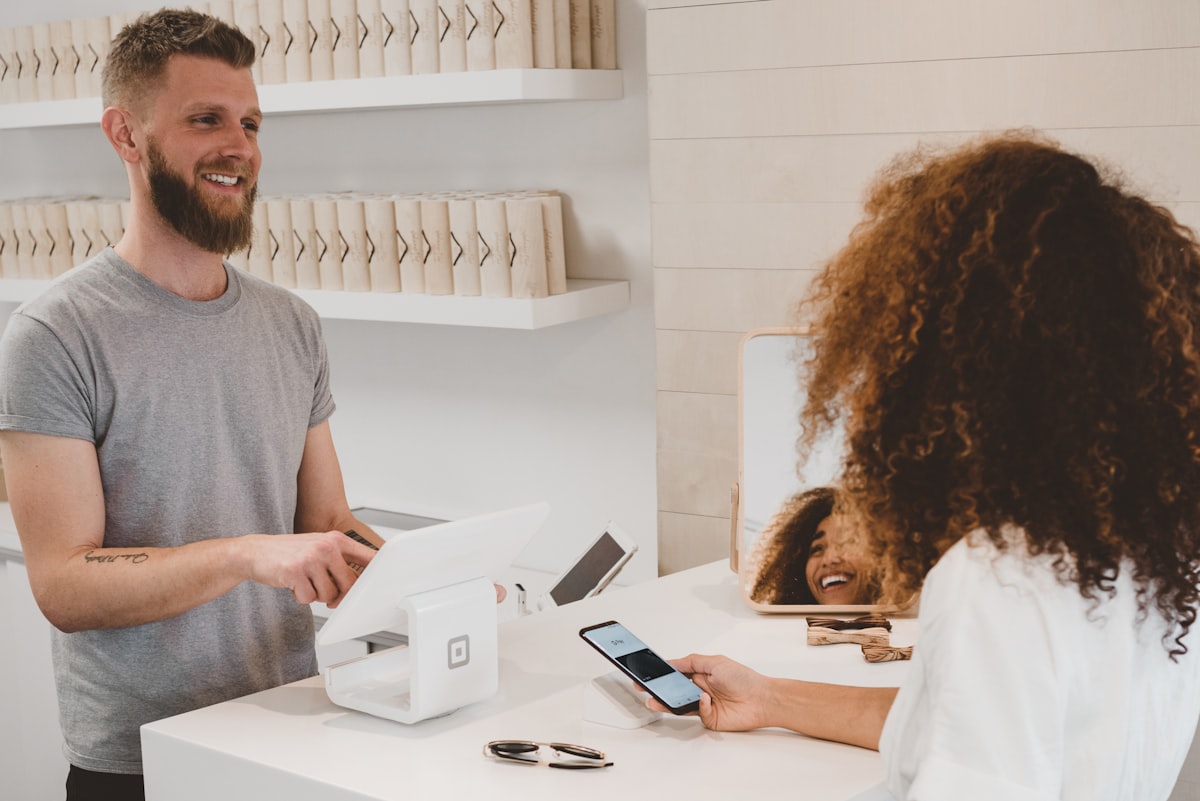
The trust gap in shopping is not static. It is generational, and getting wider at the edges. RTIH reported on April 10, citing Retail Technology Show research, that 53 percent of consumers distrust AI-generated social content. Among Gen Z that figure rises to 58 percent. The generation most fluent in AI is the most skeptical of AI-generated marketing. In the same study, 43 percent said authentic, human-created content has become more important to them because of AI, not less.
Macy's "Ask Macy's" assistant produced a 4.75x spending increase among users, per a Bloomberg report in March. That outcome is real, and it matters: AI can drive commerce hard when it operates as a knowledgeable assistant, surfacing options and answering questions, rather than as an autonomous buyer. Meta's Muse Spark, which CNBC reported on April 8 includes a Shopping mode inside Instagram, is the opposite bet. The platform that shows you inspiration now wants to sell you the product using your social graph. Convenient, and a legitimate question sits underneath it: who does that AI serve?
We built Mubboo's Shopping channel to be independent of platform commerce incentives. No affiliate pressure shaping the ranking, no advertiser weighting the verdict. Our comparison pages at mubboo.com/shopping are written so that AI agents citing them pass along a recommendation made by humans with no reason to lie about the second-best option.
Government: the AI you cannot opt out of
The travel and shopping trust gaps are at least symmetric: consumers can walk away. The government trust gap is not. NASCIO's annual survey of state CIOs, published December 16 with 51 respondents, found that AI and machine learning is the number one state IT priority for the first time in the survey's history, ending cybersecurity's twelve-year streak at the top. A separate NASCIO, Grant Thornton and CompTIA survey reported via Propelus found that 82 percent of state IT employees now use generative AI daily at work. Granicus data from earlier in 2026 put local and state agency AI adoption at 57 to 58 percent.
Unlike shopping or travel, much of this is not optional for the citizen on the other end. You cannot choose to skip the chatbot when renewing your license, and you cannot route around the AI that is triaging your permit application. Route Fifty and Appian reported on April 6 that agencies are embedding AI into permit review, infrastructure planning, and investigations: the administrative plumbing of daily life.
Governance is trying to catch up. NASCIO's Doug Robinson told Federal News Network that more than 1,000 AI-related bills were introduced in state legislatures in 2025. But only 25 percent of states have dedicated funding lines for generative AI, per the Propelus report. The tools built for consumer commerce are being repurposed for government accountability functions with a fraction of the budget and almost none of the oversight. Route Fifty summarized the mood among state technology leaders this way: by the end of 2026, AI will be judged less by what is possible and more by what is dependable.
The AI that processes your permit application has a different accountability requirement than the AI that recommends your hotel. Both matter. Both need independent scrutiny. The Mubboo Local channel is where we track how these systems affect consumers in practice.
What does the trust gap actually demand?
Across all four verticals the same four-step pattern repeats.
- Technology readiness is here. AI can search, compare, recommend, and transact across travel, shopping, local services and government.
- Consumer interest is high. Between 70 and 89 percent of consumers want AI to help: Booking.com's 89 percent on travel planning, Acosta's 70 percent on shopping, Dune7's 71 percent on booking assistance.
- Consumer trust in autonomy is almost nonexistent. Between 2 and 12 percent will let AI act without approval: Skift's 2 percent on travel bookings, Acosta's 12 percent on purchases.
- The gap between those last two numbers is where the next two years of consumer AI will be won or lost.
What fills the gap is not more capability. It is transparency about what the AI considered and why. It is a human fallback that actually works when the decision is non-routine. It is a clear answer to the accountability question when AI gets it wrong. And it is independent judgment that is not owned by the platform doing the selling. AI agents serve whoever built them. Independent comparison platforms are accountable to the reader.
At Mubboo we build for the moment between AI recommendation and consumer decision. We cover all four of the verticals where this gap exists: Shopping, Travel, Local services, and the AI-mediated government interactions that touch daily life. The gap does not respect category boundaries, and neither do we. Our role is not to replace the AI. It is to provide the editorial judgment, the scenario-specific advice, and the honest comparison that lets a consumer trust the decision they are about to make. Our Australia edition at mubboo.au applies the same principle to a different market, because the trust gap is global but the context is always local.
AI can book your hotel in seconds, and 71 percent of consumers want it to try. But 98 percent want to approve the booking before it goes through. AI can recommend running shoes, and 70 percent of shoppers are using it that way. But 88 percent do not trust it to buy for them. Those numbers are not a failure of the technology. They are a request from the consumer, a clear one, for a role that is useful without being autonomous.
That request is where independent platforms earn their value in 2026. The gap between 71 and 2, between 70 and 12, is not a rounding error. It is the market.

Richard Lee
Founder
Richard is the founder of Mubboo, building an AI-powered platform that helps everyday consumers navigate shopping, travel, finance, and local life across multiple countries.